When a Pastor is the Main Influencer: How We Created a Social Project Acquired by Nickelodeon
We had no budget, no landing page, and no targeted ads. Just a pastor, a church, and an idea we believed in. Due to social inequality, most women in the Dominican Republic work for $150 a month. We created a free vocational training course that helped Dominican women double their income. A month later, the program was acquired by Nickelodeon Hotels. I’ll tell you how our social project turned into a PR case study for an international hotel chain.
Why We Decided to Start With Nannies
A couple of years ago, I had a charitable foundation called Dominican Mom: we provided psychological, medical, and legal assistance to women in the Dominican Republic. At that time (as is still the case), I was deeply concerned about gender inequality in the region, especially the lack of access to education for most women. We decided to create a course. But not an abstract "everything at once" course, rather something highly practical—for women who work with children: nannies, governesses, caregivers.
Why? Because here, the effect is immediately visible. Recruitment agencies confirmed: after completing such a course, women could expect a +50–60% increase in salary—up to $400 a month. For a local family, this isn’t just an extra $250. It’s a transition from survival to stability.
How to Explain the Value of Education to Those Who Never Needed It
To help develop the course content, we invited the Dominican Republic Red Cross, the Association of Child Psychologists, and a private medical clinic to collaborate. But we quickly realized that quality content and expertise alone were not enough to attract participants.
Many Dominican women marry young, have several children, and work their entire lives for minimum wage. They simply have neither the time nor the belief that education will change anything. For them, education is not a step toward a new life, but an incomprehensible and distant idea. So, first, we needed to gain their trust. Otherwise, no one would have come.
When creating a project for women living below the poverty line, a landing page isn’t necessary. What’s needed is someone the audience trusts. So, we didn’t use social media and targeted ads; instead, we went where local women typically seek support. In Latin America, especially in poor areas, the church is a center for communication, support, and information, and the pastor is, in essence, the most influential figure in the community.
We reached an agreement with the church: we explained the course and its goal, and asked the pastors to help convey this to the women. This worked: the pastor legitimized our initiative. Dominican women felt they could trust us.
What We Included in the Course Program
It was important to us that the course wasn’t a formality, but rather real support in their work. The program turned out to be comprehensive, with theory and practice:
First Aid and Child Safety
Theory ranging from basic CPR to dealing with injuries and alarming symptoms. And practice: so that in an emergency, the nanny would know how to act correctly.
Care and Nutrition
We taught how to consider age-specific needs, establish routines, choose nutrition, and developmental games for children.
Psychology
We covered theoretical questions: how to understand a child’s behavior, build trust, and approach children with different temperaments—so the nanny could understand why a child is being capricious and how to handle it.
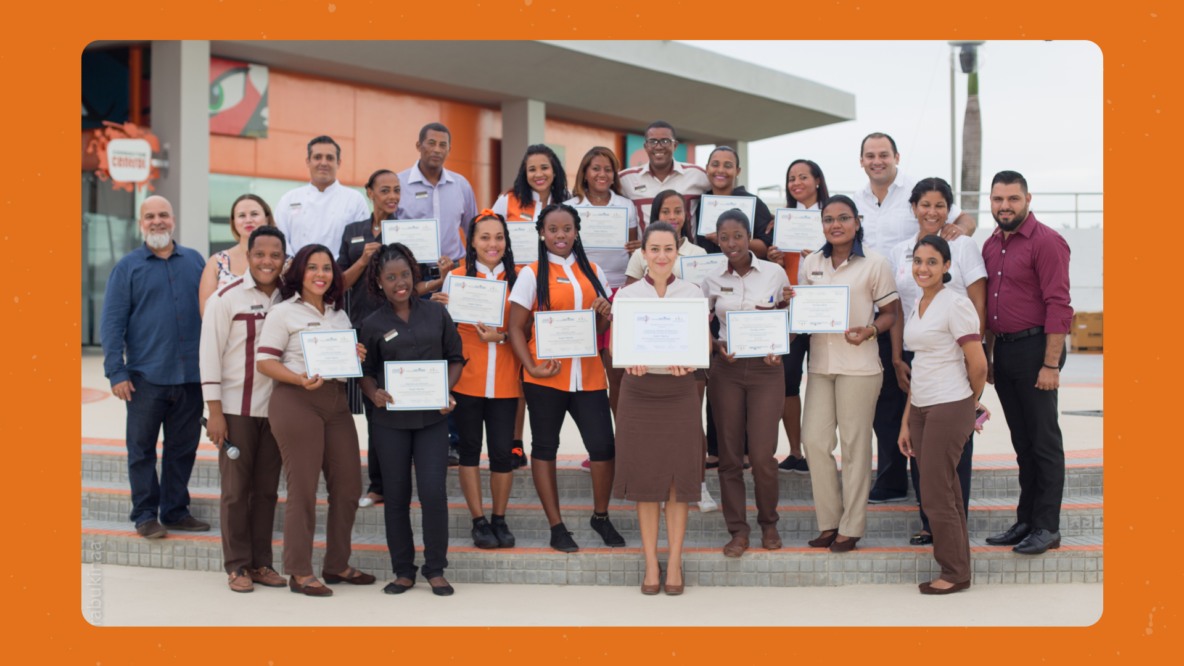
Classes were held at the church at a convenient time for women—evenings and weekends. Yet many still came to classes with their children because they had no one to leave them with. More than 1500 women completed the course at the church—despite the lack of advertising and paid promotion.
Why Nickelodeon Included Our Course in Their Training System
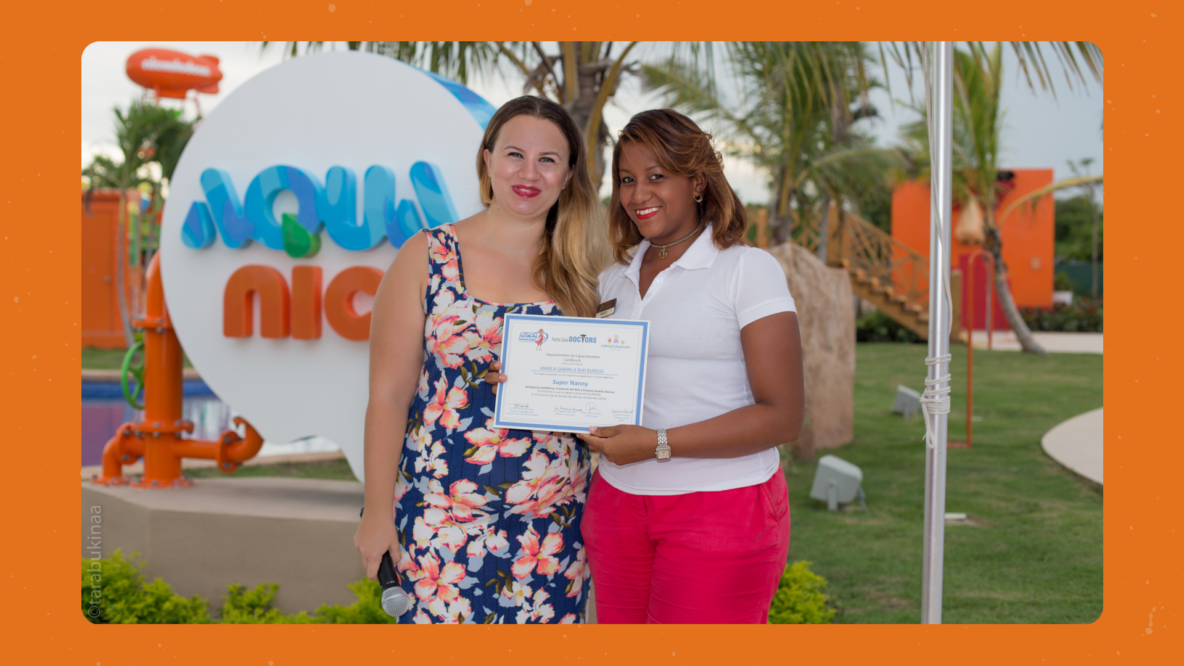
A week after the course ended, representatives from Nickelodeon Hotels contacted us—a chain of family hotels with areas styled after the Nickelodeon cartoon universe.
At that time, Nickelodeon was still preparing to launch a hotel in the Dominican Republic, near Punta Cana. They needed to show that the hotel was a safe place for families with children, with caring and trained staff. Our project solved two of their problems at once: it helped employees in the region gain qualifications and confirmed the high standard of safety and child care at the hotel.
Nickelodeon approached us with a proposal to adapt the course for their team. As a result, our program became part of the internal training standard at Nickelodeon Hotels in the region. We publicized this initiative in the media: it became not only a useful educational case study but also a strong PR performance for the brand.
What This Case Study Taught Us: 4 Rules for Those Working in Emerging Markets
1. The Most Influential People Aren’t Bloggers, But Community Leaders
In the Dominican Republic and other Latin American countries, the first people sought for advice are still pastors, doctors, and teachers. They become the link between you and the audience. We weren’t looking for ambassadors—we were looking for those who are genuinely trusted. It worked.
2. Sometimes, Contact is More Important Than Reach
For women who lack financial reserves and time to ponder, social media advertising is just noise. What worked was something that could be discussed in person, asking a friend’s opinion, hearing it from a respected person. We went to the church, not to targeted ads—and we didn’t go wrong.
3. Even the Most Sincere Project Must Be Carefully Planned
For the idea "education = stable income" to be taken seriously, we packaged the course as a complete product: with a clear program, concrete benefits, experts, and support. Partnerships also helped—employment agencies confirmed that course graduates earned above-market salaries.
4. Product is More Important Than Packaging
We didn’t build a website, hire designers, or shoot videos. We created a course that was genuinely useful to participate in. And because of that, we attracted the attention of an international brand—not because of the packaging, but because it had meaning.
What Came Out of It and Why It Worked
Initially, 1500 women attended classes in the church hall. Without advertising, without a budget, and without fancy packaging—solely through recommendations and belief that it could change something. After the deal with Nickelodeon, 2000 employees at each hotel in the chain were trained in the program—a total of around 10,000 women.
This case isn’t about a stroke of luck. When you create a useful and honest product built on trust, it begins to work more broadly than you planned. The main thing is to speak the language of those for whom you are working.